








The business case for Trackman: How clubs and ranges are driving ROI
Examples from Trackman-powered golf clubs and driving ranges around the world show how the technology can generate ROI by increasing range-ball sales, attracting more frequent visits, extending playable hours, creating new revenue streams and supporting better operational decisions.
 Trackman Editorial Team
For golf clubs and ranges, investing in technology ultimately has to make sense financially.
A better player experience matters. So does attracting new golfers, improving coaching and modernizing a facility. But behind all of those ambitions sits a fundamental question for any operator considering a major investment:
What’s the return on investment?
Across Trackman-powered clubs and ranges around the world, the answer is showing up in different ways. More balls hit. More time spent on site. Longer seasons. New revenue streams. Greater coaching capacity. And better insight into how facilities are actually being used.
The results reported by individual facilities vary, but some are significant: a 140% increase in revenue during the first three months at Eaglewood Golf Course. Range revenue more than doubling at Fana Golfklubb. A 40% increase in ball sales at Melbourne Golf Park. €50,000 in additional net revenue at Achimer Golf Club. Seasonal income doubling at Royal Drottningholm Golf Club. And annual range-ball revenue at Fort Walton Beach Golf Club projected to nearly triple in three years.
There isn't one formula for generating ROI with Trackman. But look across the experiences of clubs and ranges in different markets, and several common themes emerge.
More Players. More Visits. More Revenue.
Perhaps the most straightforward path to return is also the simplest: create a range experience golfers want to use more often.
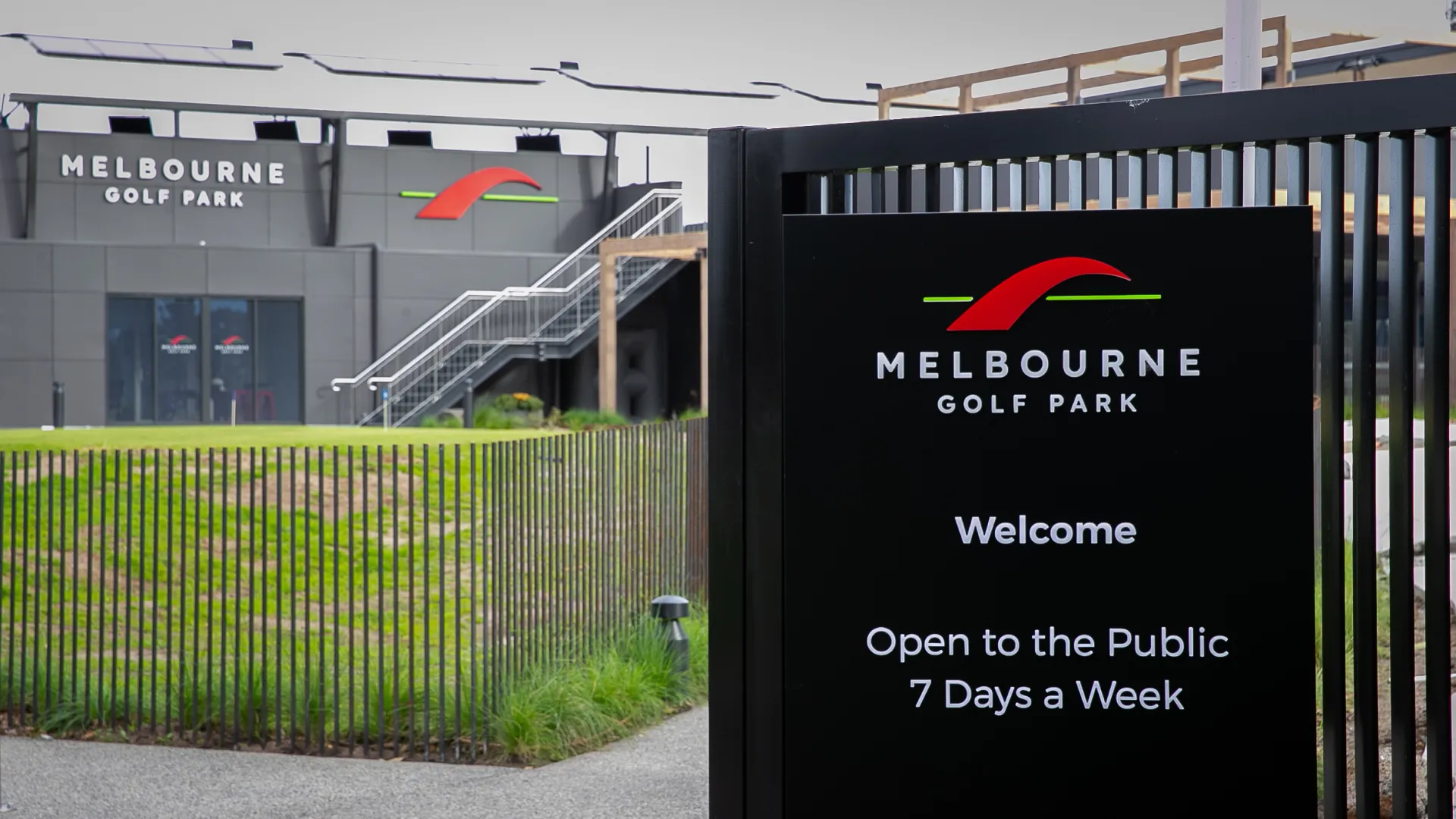
At Melbourne Golf Park in Australia, introducing Trackman Range helped broaden the facility's appeal to a new demographic while increasing casual use and club rentals. More than 80% of customers were using Trackman on the range — and ball sales increased by an average of 40% compared with the previous year, despite a price increase.
For Melbourne Golf Park's David Tapping, those results were particularly notable because the range was already busy before Trackman arrived. He had initially questioned whether the investment was necessary and whether the technology could slow golfers down in the bays. Instead, the partnership has proven to be positive for customers and business.
A similar pattern can be seen thousands of miles away at Fana Golfklubb in Bergen, Norway.
After installing Trackman Range, the club saw members and guests across different age groups embrace its transition from a traditional driving range into a modern practice facility. The commercial impact followed.
“As a result, the club has experienced outstanding growth, and range revenue has more than doubled since Trackman was installed,” says Marcus Knudsen, Club Coordinator, Fana Golfklubb
At Wentworth Golf Club in the UK, meanwhile, increased engagement can be seen in how much more frequently its 16 range bays are being used.
“The members and guest feedback has been first class. Traffic at the range is certainly going up. Our bay-usage time has gone through the roof,” says Stuart Boyle, Director of Golf, PGA Pro.
For Fort Walton Beach Golf Club in Florida, the increase has been even more pronounced.
The public golf club is on pace to nearly triple its annual range-ball revenue compared with three years earlier. Golfers are incorporating the range into their routines more frequently — more customers now stop by during the week rather than waiting until the weekend to play.
“Right now, we’re on pace to do probably about $430,000 or $440,000 in range balls annually. Three years ago, it was at about $150,000. It’s been really good,” says Jacob Hill, Golf Course Director at Fort Walton Beach Golf Club.
Different clubs. Different markets. But the underlying business principle is the same: greater engagement can turn existing range capacity into a more productive asset.
Turning the off-Season into revenue season
ROI isn't only about generating more revenue during the hours a facility is already open.
Sometimes it's about creating sellable hours that previously didn't exist.
At Royal Drottningholm Golf Club in Sweden, winter traditionally meant the off-season. Trackman simulators have helped change that equation. Simulator bookings now remain nearly full throughout the winter, while indoor golf also supports coaching and academy sessions during the warmer months.
The indoor season has also allowed Drottningholm to extend its tournament calendar, with groups competing in weekly winter tournaments and members given more reasons to spend time at the club throughout the year. For Club Director Stefan Andorff, the impact can be seen directly in the numbers.
“Simulator bookings are almost fully booked all winter. We've doubled income during the season, and range activity has also doubled,” says Andorff.
The benefits extend into coaching, too.
“Trackman Indoor has helped me tremendously in building a year-round practice academy. We’ve seen lessons and group sessions increase a lot during the winter,” says Axel Westin, Head Teaching Pro, Royal Drottningholm GC.
The same principle is at work at Eaglewood Golf Course in Utah.
Long winters and hot summers once limited the facility's calendar. Today, covered Trackman Range bays and indoor simulators allow players to practice and compete through snow, heat and everything in between, while coaches can offer lessons, clinics and junior programs throughout the year.
The commercial impact came quickly: Eaglewood reported a 140% increase in revenue in the first three months following the implementation of Trackman 360.
And the return went beyond the original expectations. Eaglewood had initially projected a seven-year ROI, but is now on track to cover installation, structure and annual Trackman fees within two years.
For Eaglewood’s PGA Coach Brent Shaver, it’s been transformative.
“Trackman has changed the way that I coach and run instruction programs. And it’s been essential in keeping me in business year-round. No question about that,” says Shaver.
Weather-proofing golf doesn’t just apply to the frigid winters of the Nordics and Rockies.
At Black Desert Resort in the US, extreme summer temperatures can make outdoor golf challenging during the hottest parts of the day.
But with Trackman technology connecting the resort's outdoor range, indoor simulators and instruction, practice, player development and social golf can continue regardless of weather conditions.
“The simulators are great as we are in the desert. And we do have some seasons, so if it's too cold or hot, having the indoor option has opened the world for us,” says Zach Kelly, Head Golf Professional of Black Desert.
Whether it's the height of winter or the peak of summer, Trackman can help clubs and ranges turn traditionally quieter periods into playable — and potentially revenue-generating — hours.
Creating new revenue streams
Increasing utilization is one way to drive a return. Creating entirely new sources of revenue is another.
Achimer Golf Club in Germany provides a clear example.
The club wanted to increase revenue beyond traditional membership and green fees, and saw Trackman Range as an opportunity to generate additional income through range-ball sales and subscriptions.
The results exceeded initial goals.
Achimer introduced annual Trackman Range subscriptions for €69 and sold 400 within two years, generating more than €20,000 in net subscription revenue. At the same time, range-ball sales doubled from approximately €30,000 to €60,000.
In total, the club reported €50,000 in additional net revenue.
At Gloria Golf Resort in Turkey, Trackman Range helped change the role of the driving range within the wider resort business.
Usage virtually doubled. Golfers began spending more time on the range and using more balls, while repeat visits and an increased price per ball contributed to higher revenue.
“It's turned the driving range into a standalone business for us,” says Gloria’s Director of Golf, David Clare.
That distinction matters. For many clubs, the range has traditionally been an amenity supporting the golf course. But with the right combination of technology, engagement and business model, it can become a revenue-generating destination in its own right.
From measuring shots to measuring the business
There's another side to ROI that is less immediately visible.
Knowing what's actually happening.
Trackman technology generates data for golfers, but Trackman Portal can also give operators data about their business — helping them understand when, where and how their facilities are being used.
At Wentworth in the UK, management can monitor bay usage and identify peak periods, then use events and tournaments to help drive activity during quieter times.
The Nelson Golf and Sports Club in the US uses its business data to understand everything from balls hit to bay-use optimization.
“I like looking at the data of how many balls have been hit on our practice range and how many days that we can actually use grass versus being on the artificial turf,” says The Nelson’s Director of Golf, James Williams Jr.
And at Gloria, that visibility gives management a much clearer picture of range performance.
“We now know exactly how many balls are being hit every day. The owners are very, very happy with it. They see the way forward with the technology,” says Clare.
Fana uses Trackman Portal daily to organize tournaments and track bay usage, balls hit, popular bays and high-activity periods. Its groundskeeping team even uses the data to identify where balls are frequently lost and optimize collection.
At Achimer, management uses similar information to monitor usage and plan corporate trial courses during off-peak periods.
For an operator, that's an important part of the business case. It's not only about generating additional activity. It's about having the information to understand that activity and make better decisions about staffing, scheduling, programming and future investment.
Turning results into future investment
For Fort Walton Beach Golf Club, generating more revenue can have implications far beyond the range itself. The municipally operated golf facility competes with other city departments for funding.
In this case, ROI is not simply producing more income. It is helping the golf operation become more self-sufficient, make a stronger case for future investment and gain greater control over how that investment is used.
“We’ll be a business run by city employees, completely separate from the city’s operations,” says Hill. “That way, we have a lot more control over where the money goes, what we do with it and how we manage our budget.”
For municipal golf facilities, greater financial autonomy makes it easier to plan for the future, invest strategically and turn long-term ambitions into action.
There is no single formula for ROI
The experiences of these facilities demonstrate why ROI from golf technology can't be reduced to a single metric.
At Eaglewood, it showed up as a 140% revenue increase in three months.
At Fana, range revenue more than doubled.
At Melbourne Golf Park, ball sales rose 40% despite a price increase.
At Achimer, new subscriptions and increased ball sales generated €50,000 in additional net revenue.
At Drottningholm, simulator bookings helped turn winter from an off-season into a period when bookings are nearly full and seasonal income has doubled.
At Wentworth, range bays are so busy now that managing the driving range on weekends has become a bigger task.
At Fort Walton Beach, annual range-ball revenue could reach as much as $440,000, compared with approximately $150,000 three years earlier — strengthening the club’s case for further investment and greater financial independence.
And at Gloria, the transformation went far enough for its Director of Golf to describe the range as a standalone business.
Different facilities will generate returns in different ways. Geography, climate, existing infrastructure, membership, pricing and business models all matter, and no individual result should be taken as a guarantee of what another facility will achieve.
But across these success stories, the pattern is clear: ROI isn't simply about charging more. It's about creating more value from the golf business you already have.
More golfers. More visits. More sellable hours. More ways to generate revenue. And more information to make every one of those opportunities count.
Check out the Trackman Success Story Hub for deeper insights into how technology can enhance your business.
Frequently Asked Questions
1. Can Trackman increase revenue at a golf business?
Yes. Individual Trackman-powered facilities have reported significant increases in revenue and usage. Eaglewood Golf Course reported a 140% revenue increase in its first three months, Fana Golfklubb says range revenue more than doubled, and Fort Walton Beach Golf Club expects to nearly triple its annual range-ball revenue, compared with three years earlier.
2. What is the ROI of installing Trackman Range?
There is no single ROI figure because results depend on factors including location, existing infrastructure, utilization, pricing and business model. At Eaglewood Golf Course, however, a project originally expected to deliver a seven-year ROI is now on track to cover range installation, structure and annual Trackman fees within two years.
3. How can Trackman generate additional revenue for a golf club?
Trackman can support multiple revenue streams, including increased range-ball sales, subscriptions, simulator bookings, coaching, academies, tournaments and greater utilization during traditionally quieter periods. Achimer, for example, generated €50,000 in additional net revenue through increased ball sales and Trackman Range subscriptions.
4. Can Trackman help golf clubs operate year-round?
Yes. Facilities such as Royal Drottningholm, Eaglewood and Fana use indoor simulators and Trackman Range to extend activity beyond their traditional golf seasons, supporting winter bookings, coaching, tournaments and practice. But it’s not just about avoiding snow and winter cold. Golf businesses in hot climates, like Black Desert, utilize Trackman to extend activity during hot summer months.
5. How does Trackman Portal help golf businesses?
Trackman Portal gives operators visibility into facility usage and business metrics such as balls hit, bay utilization, popular bays and peak activity periods. Facilities use this information to improve scheduling, programming and utilization of quieter periods.