







Performance analysis in football: Gaining a measurable set piece edge
How elite football clubs use data-driven set piece training to improve delivery, consistency and match-winning moments.
 Trackman Editorial Team
In elite football, where the difference between success and failure is often measured in millimetres and milliseconds, clubs are constantly searching for competitive advantage. Increasingly, that edge is not coming from open play alone, but from the moments the game stops.
Set pieces are among the most decisive situations in modern football, yet historically they have been some of the least measured and least understood. Corners, free-kicks and penalties are rehearsed every week on training grounds around the world, but until recently, coaches had limited ways to objectively analyse the quality and consistency of delivery.
That is beginning to change through advances in football performance analysis technology.
According to Jordan Garbutt, head of football at Trackman, who has spent more than two decades working across elite football performance technology and advising clubs and organisations at the highest level of the game, the opportunity lies in turning those decisive moments into measurable, repeatable actions.
“Set pieces are one of the most controllable aspects of football,” he says. “Yet historically, they haven’t been measured or trained with the same level of detail.”
Garbutt believes the shift toward data driven ball striking analysis is creating a new layer of competitive advantage for clubs.
“We give clubs a measurable edge in the moments that decide matches—ball striking and set pieces.”
In a sport where around 70% of matches are decided by a single goal — and where approximately 25–35% of goals come from set pieces — marginal gains quickly become significant. A single goal can influence league position, qualification, or relegation. Over the course of a season, those moments can translate into millions in revenue.
“If you know that a third of your goals come from set pieces,” Garbutt says, “then improving even slightly in that area creates a measurable competitive advantage.”
Overall factors that improve set piece performance
The objective is simple: improve the quality and consistency of ball striking, and the outcomes improve with it.
Elite clubs are already using football analysis technology across a range of scenarios including:
Refining corner and free-kick delivery
Optimising penalty conversion
Improving long-range striking consistency
Developing goalkeeper distribution
Identifying specialist takers
Aligning delivery profiles with tactical routines
At the highest level, Trackman is the tool used to improve performance in these disciplines.
What is performance analysis in football?
Performance analysis in football is the process of combining objective data, video and coaching insight to better understand how individuals and teams perform — and whether they are executing against the intended tactical and technical objectives.
At its best, performance analysis is not simply about collecting data. It is about turning complex information into clear, actionable insight that coaches and players can actually use to improve decision-making, development and performance on the pitch.
That means blending the objective with the subjective:
What happened?
Why did it happen?
Was it aligned with the game plan?
And how can it be improved?
Ultimately, performance analysis exists to help coaches make better decisions, help players learn faster, and help teams perform more consistently.
Traditionally, ball striking coaching has relied on observation, repetition and subjective feedback. While those elements remain essential, modern analysis increasingly allows clubs to measure actions that were previously judged only by feel.
Set pieces are a clear example.
“There’s a perception that elite players already have this mastered,” Garbutt explains. “But when you actually measure it, the consistency often isn’t where people expect it to be.”
Initial data gathered by clubs using Trackman shows that even elite-level players may only hit intended target zones around 30% of the time. With structured feedback and deliberate practice, that accuracy can improve dramatically.
“That’s where it becomes powerful,” Garbutt says. “Because now you’re not hoping the ball goes where you need it to — you’re expecting it to.”
This changes the nature of set piece coaching entirely. Instead of treating delivery as variable and unpredictable, coaches can begin designing routines around repeatable execution.
Clubs consistently report improvements in three key areas:
Delivery consistency
Players develop the ability to repeatedly execute precise deliveries that meet the demands of timing, trajectory and positioning.
Confidence in matches
“Players go into games knowing they’ve executed that exact action multiple times during the week,” Garbutt says. “That removes doubt.”
Coaching clarity
Coaches gain objective insight into performance, understanding not only outcomes but the mechanics behind them.
“You can have the best routine in the world,” Garbutt adds, “but if the ball doesn’t arrive where it needs to, it breaks down. Once delivery becomes consistent, the whole system becomes more effective.”
Why real-time feedback accelerates player development
One of the defining changes in modern football performance analysis is immediacy.
Historically, ball striking was developed through repetition and delayed feedback. A player might not fully understand why a delivery succeeded or failed until long after the session had ended.
Trackman compresses that learning cycle into seconds.
“For the first time, we can give instant feedback on every strike,” Garbutt explains. “It’s not just about whether it was good or bad — it’s understanding why.”
This creates several important advantages.
Faster learning: Players immediately connect technical execution with ball flight and outcome.
Higher engagement: Training becomes more interactive and competitive.
“The environment shifts,” Garbutt says. “Players want one more go. One more rep. One better strike.”Accountability: Performance becomes measurable and benchmarked, introducing structure into an area that has traditionally been informal.
“It turns repetition into deliberate practice,” he adds. “Now every kick has a purpose.”
How Trackman’s football performance analysis technology works
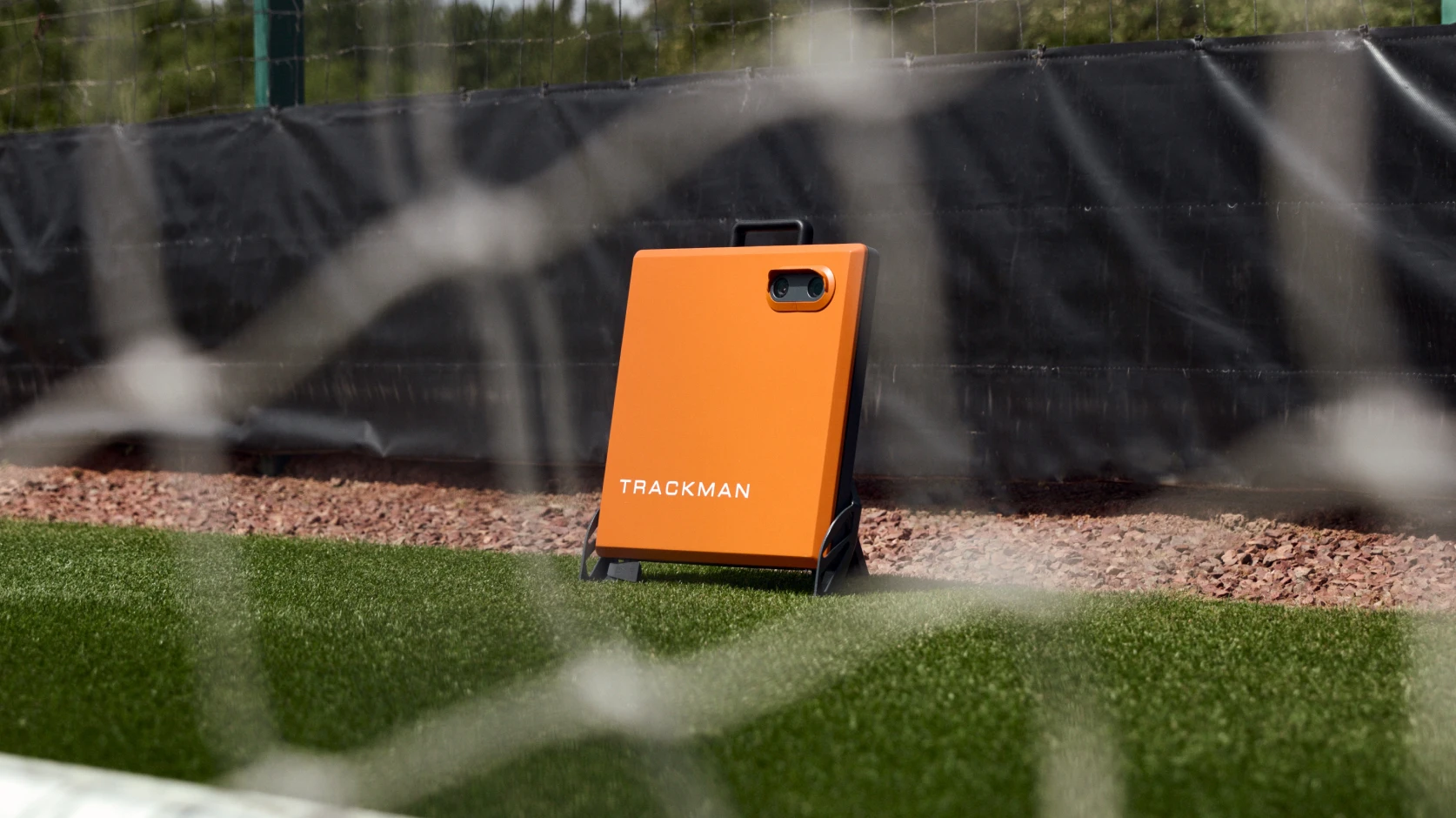
Trackman combines radar tracking with real-time data feedback to analyse every aspect of a ball strike.
A Doppler radar unit is positioned pitch-side and can be deployed within minutes. No wearables are required, and training sessions continue as normal.
“It doesn’t disrupt training,” Garbutt explains. “Players just step up and hit a ball — but now we’re capturing everything behind that strike.”
The system provides instant feedback on:
Ball speed
Spin
Trajectory
Launch angle
Timing
Consistency
Indexed and synchronised Video Analysis
Accuracy relative to defined targets
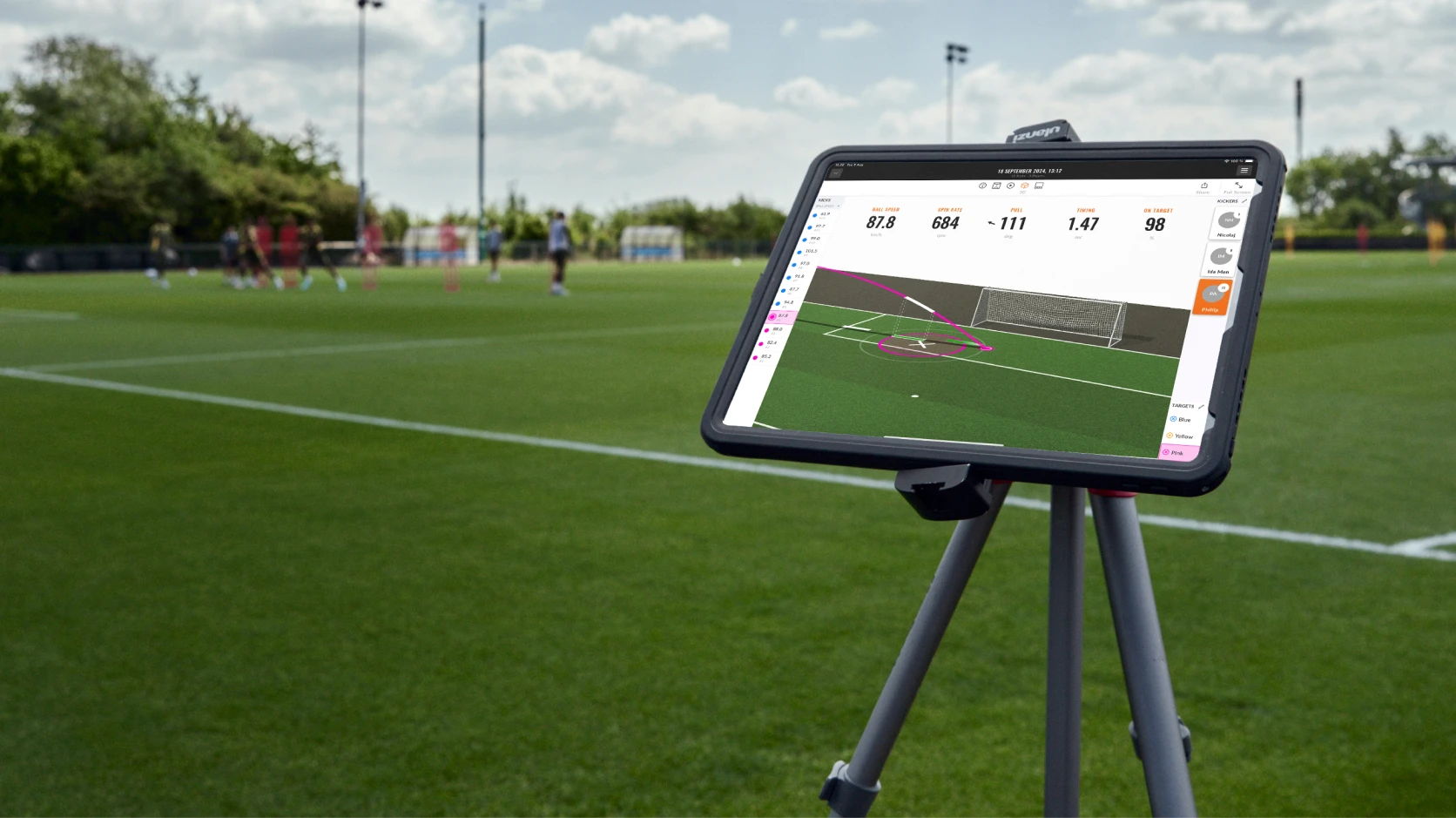
For set piece analysis, Trackman hereby enables deeper insight into:
Delivery profiles
Repeatability
First-contact zones
Ball-flight behaviour
“You’re not just seeing where the ball lands,” Garbutt says. “You’re understanding how it got there — and whether it’s repeatable.”
The value is not simply the collection of data, but how quickly players and coaches can apply it.
Players can instantly understand:
How technical adjustments affect ball flight
Why a delivery missed its target zone
What changes improve consistency
“You’re closing the gap between perception and reality,” Garbutt says. “And that’s where learning accelerates.”
For coaches and analysts, the system introduces a level of objectivity that has often been missing from set piece development.
“It brings accountability into an area that’s traditionally been subjective. Now you can measure it, track it, and improve it over time.”
Readers looking for a broader overview of the company’s wider sports tracking technology can also explore Trackman.
Why set pieces are the highest-value area to analyse
Football is increasingly played within tight physical and tactical margins. That makes controllable moments more valuable than ever.
According to Garbutt, set pieces are uniquely suited to performance analysis because they are fully repeatable.
“Set pieces are one of the few parts of the game you can fully control and rehearse,” he says. “That’s where the biggest opportunity to improve sits.”
Unlike open play, set pieces can be:
Structured
Repeated
Refined
Training environments allow players to build habits and consistency so execution in matches becomes instinctive.
“The goal is simple,” Garbutt adds. “Make it so repeatable in training that when the moment comes in a game, it feels familiar.”
This is also why clubs are increasingly investing in specialist set piece coaches and analysts. What was once treated as a secondary phase of the game is now becoming a dedicated performance discipline in its own right.
How to integrate performance analysis into modern training regimes
In an increasingly congested football calendar, clubs need development methods that improve performance without significantly increasing physical load.
Garbutt believes ball-striking work fits naturally into that environment.
“It’s medium impact, but relatively low physical load,” he explains.
Rather than long isolated sessions, many clubs integrate short, focused repetitions into existing training structures.
“Five to ten minutes, five to ten kicks — little and often,” he says. “But done with intent and feedback.”
This approach helps players develop:
Muscle memory
Confidence
Delivery consistency
Importantly, it transforms set piece training from occasional rehearsal into continuous development.
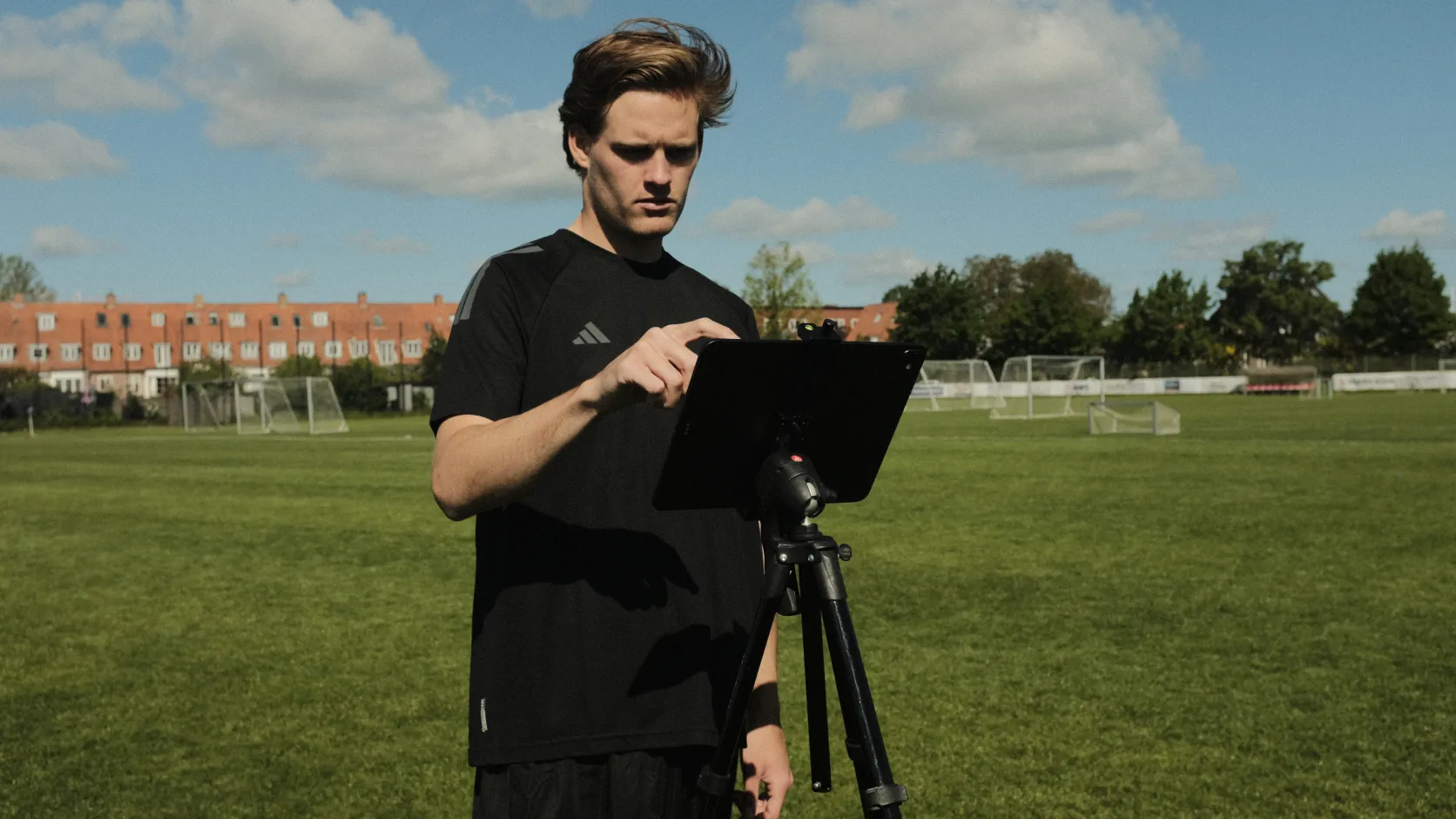
How coaches, analysts and players each use the data
Successful football analysis environments depend on alignment across coaching staff, analysts and players.
Within elite clubs:
Coaches define targets and integrate tactical objectives
Analysts interpret data and identify trends
Players take ownership of execution and improvement
“The best environments are where it becomes part of the culture,” Garbutt says. “Not something you dip into — but something that’s embedded.”
He also sees a broader shift happening across the professional game.
“Set piece coaches are becoming more common because clubs are recognizing the value,” he says. “It’s moving from an add-on to a specialist discipline.”
The future of performance analysis in football
Garbutt believes football will continue moving toward greater measurement, greater specialisation and deeper integration between training and match performance.
“The direction is clear — more measurement, more understanding, more specialisation,” he says.
Over the next five years, he expects:
Wider adoption across elite clubs
Greater use throughout academy pathways
Stronger links between training data and match outcomes
More advanced performance modelling around ball striking
“This won’t be a niche tool,” he adds. “It will be part of how the game develops players.”
The next major step is likely to be the connection between what happens on the training ground and what happens in competition.
“We’re trying to answer a simple question,” Garbutt says. “What are you training — and can you deliver it when it matters?”
Ultimately, set pieces are no longer viewed simply as isolated moments within a match. They are now recognised as high-value, controllable opportunities that can be systematically improved through football performance analysis.
What was once overlooked is now being measured.
What was once assumed is now being optimised.
What was once marginal is now material.
Trackman doesn’t change the game itself.
It changes how well teams understand—and execute—the moments that decide it.
“If you can make those moments more consistent, you give yourself a real edge. And in football, that edge can be everything. Teams using Trackman are already gaining an advantage.”

Jordan Garbutt
Head of Football at Trackman
Ready to gain the advantage? Explore the essential set piece analytics technology